
Wonders in Civilization VII
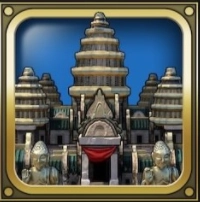
Angkor Wat
Wonder of the Ancient Era
Yields
+3 😃Happiness. Does not age.
+1 Specialist limit in this settlement.
Requirements
Khmer Exclusive
Principle
- Amnach
Principle
- Philosophy
Terrain / Tile
Must be built adjacent to a River.

Real History
Built in the 12th century by Suryavarman II, Angkor Wat was the greatest expression of power of the Khmer Empire. Conceived as a temple-mountain dedicated to Vishnu, it mirrored Mount Meru—the cosmic axis—turning architecture into political legitimacy. Its logistics were extraordinary: thousands of sandstone blocks transported through canals that showcased the Khmer mastery of water management, their greatest civilizational weapon. Over time, the temple transitioned from Hinduism to Buddhism without losing its spiritual centrality, keeping Angkor as a sacred capital for centuries. In gameplay terms, Angkor Wat represents agricultural prosperity, advanced administration, and enduring faith— a wonder that turns every granary and temple into the foundations of an empire hard to topple.
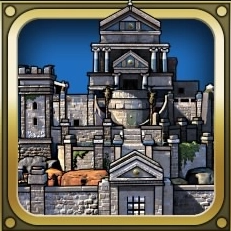
Birsa
Wonder of the Ancient Era
Yields
+2 Gold. Does not age.
Trade Routes cannot be plundered.
Adjacent Districts receive Walls in this City.
Requirements
Exclusive Principle
of Carthage
- Naval Sheds
Principle
- Engineering
Terrain / Tile
Must be built adjacent to a Coast tile.
Real History
Birsa Munda (1875–1900) emerged during British colonial rule in India as a spiritual leader and revolutionary figure of the Munda people. In a region marked by dispossession and exploitation, Birsa united villages, denounced abuses, and preached a return to traditional order, sparking the Ulgulan, “The Great Uprising.” After his death, he became a symbol of indigenous resistance—identity, land, and dignity as unbreakable pillars. In gameplay terms, Birsa acts as a cultural-political wonder: cohesion, combat morale, and reduced foreign pressure. An icon that turns a small civilization into a force no empire can underestimate.
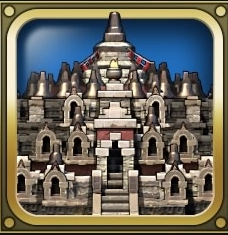
BOROBUDUR
Wonder of the Age of Discovery

Yields
+3 😃Happiness. Does not age.
+2 Food and 😃Happiness in Districts of this Settlement.
Requirements
Exclusive Principle
of Majapahit
- Gamelan
Principle
- Bureaucracy
Terrain / Tile
Must be built adjacent to a Coast tile.
Real History
Built between the 8th and 9th centuries by the Sailendra dynasty, Borobudur is the largest Buddhist stupa ever constructed: a stone mandala guiding the believer from the earthly world toward enlightenment. Its more than 2,500 reliefs narrate teachings and scenes of Javanese life, turning the temple into a monumental sacred text. Buried for centuries under volcanic ash, its modern restoration restored it as the spiritual jewel of Southeast Asia. In gameplay, Borobudur boosts culture, faith, and tourism—strengthening inner unity and projecting Javanese prestige outward. A wonder that turns your civilization into the spiritual beacon of the continent.
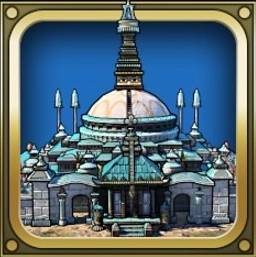
Boudhanath
Wonder of the Modern Era
Yields
+6 Influence. Does not age.
+20 Relationship with other leaders.
Requirements
Exclusive Principle
of Nepal
- Singha Durbar
Principle
- Nationalism
Terrain / Tile
Must be built on Grassland or Tropical Terrain adjacent to a Mountain.
Real History
Built around the 14th century in the Kathmandu Valley, Boudhanath is one of the largest stupas in the world and the heart of Tibetan Buddhism outside Tibet. Its white dome, crowned by the “Eyes of Buddha,” symbolizes vigilance, wisdom, and the path to enlightenment. For centuries it served as a key waypoint for the Himalayan caravan routes linking Tibet with the Indian world, blending trade, culture, and spirituality. After the Tibetan exodus of the 20th century, it became a cultural refuge and a major center of monastic study. In-game, Boudhanath provides high Faith, expanded religious pressure, and diplomatic bonuses with spiritual civilizations—turning your capital into a sanctuary, a magnet for pilgrims, and a hub of religious synergy.
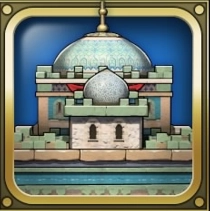
House of Wisdom
Wonder of the Age of Discovery
Yields
+3 Science. Does not age.
+1 Relic. Provides 3 Relic slots.
+2 Science from “Great Works”.
Requirements
Exclusive Principle
of the Abbasids
- Al-Jabr
- Dominion
Principle
- Society
- Dominion
Terrain / Tile
Must be built adjacent to a District.
Real History
Founded in 9th-century Baghdad by the Abbasid Caliphate, the House of Wisdom became the greatest center of knowledge of its age. Scholars from Arab, Persian, Syriac, and Indian traditions translated Greek texts, developed mathematics, astronomy, cartography, and medicine—laying the foundations of science later inherited by the West. Its library held thousands of manuscripts and functioned simultaneously as a laboratory, observatory, and university. It was the emblem of the Islamic Golden Age, where knowledge became a tool of politics, innovation, and global prestige.
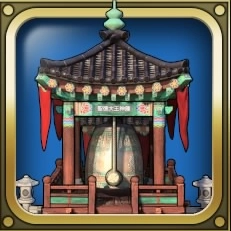
Emille Bell
Wonder of the Ancient Era

Yields
+2 Influence. Does not age.
Grants the Ginseng Accord, a diplomatic effort that provides Food to both leaders.
+1 Diplomatic Attribute point.
Requirements
Exclusive Principle
of Silla
- Samguk Sagi
Principle
- Citizenship
Terrain / Tile
Must be built on Rugged Terrain.
Real History
The resonant voice of a kingdom. Cast in the 8th century during the Korean kingdom of Silla, the Emille Bell (also known as the Sacred Bell of King Seongdeok) is one of the masterpieces of Asian metallurgy. Its colossal size and carefully tuned alloy produce a deep tone that, according to legend, could be heard for miles. Its decorations —dragons, lotus flowers, and celestial patterns— symbolize a realm unified by culture, spirituality, and art. It served in both Buddhist ceremonies and state events, reinforcing Silla’s identity at the height of its power. In Civilization terms, the Emille Bell brings Culture, Faith, and extended cultural reach, while strengthening internal harmony in the city. A Wonder that turns your civilization into a voice that cannot be ignored.
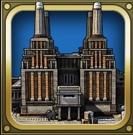
Battersea Power Station
Wonder of the Modern Era

Yields
+4 Production. Does not age.
Receive a second Naval unit each time you train one.
Requirements
Exclusive Principle
of Great Britain
- Pax Britannica
- Dominion
Technology
- Electricity
- Dominion
Terrain / Tile
Must be built adjacent to Coast.
Real History
Built between 1929 and 1955 on the banks of the Thames, Battersea Power Station became an icon of Britain’s late industrial age. Its art deco design, four monumental chimneys, and massive generating capacity symbolized a modern, electrified, and urban United Kingdom. For decades it powered London, driving industry, transport, and homes through the technological revolutions of the 20th century. Even after its closure, its silhouette remained a cultural symbol, appearing in art, music, and architecture.
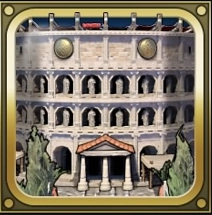
Colosseum
Wonder of the Ancient Era

Yields
+3 Culture. Does not age.
+2 😃 Happiness in Neighborhoods in this Settlement.
Requirements
Exclusive Principle
of Rome
- Senatus Populusque Romanus
Principle
- Entertainment
Terrain / Tile
Must be built adjacent to a District.
Real History
Inaugurated in 80 CE under Emperor Titus, the Colosseum was the largest arena ever built by the Roman Empire. Its engineering —tiered seating, radial corridors, trapdoors, and mechanical lifts— allowed for massive spectacles of gladiatorial combat, hunts, and even naval re-enactments. More than simple entertainment, it was imperial propaganda: each show displayed Rome’s wealth, power, and control over its population. Its construction marked the peak of Roman stone and concrete architecture, and its influence has echoed through stadium design for centuries.
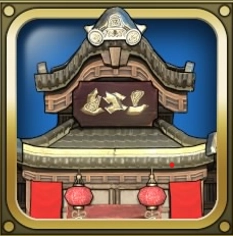
Dogo Onsen
Wonder of the Modern Era

Yields
+4 😃 Happiness. Does not age.
Population in this Settlement increases with every celebration.
Requirements
Exclusive Principle
of Japan
- Bunmei Kaika
Principle
- Social Question
Terrain / Tile
Must be built adjacent to the Coast.
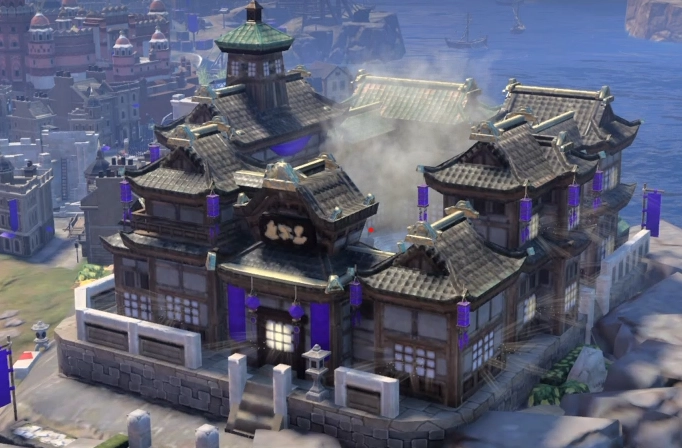
Real History
Located in Matsuyama and with over a thousand years of history, Dogo Onsen is one of Japan’s oldest hot spring baths. Its main building, rebuilt in the 19th century, blends wood, tradition, and symbolic architecture, reflecting the Japanese link between purification, health, and community. Over the centuries, emperors, poets, and travelers have bathed in its waters, turning it into a cultural as well as spiritual landmark. The legend of a wounded heron healed by the hot springs elevated it to an icon of well-being and divine protection.
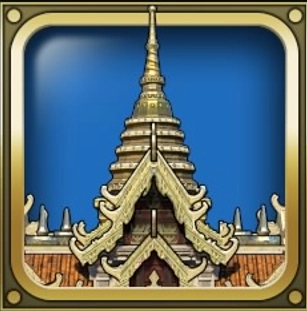
Doi Suthep
Wonder of the Modern Era

Yields
+5 Culture, +5 Gold, and +4 Influence for each City-State of which you are Suzerain.
Does not age.
Requirements
Exclusive Principle
of Siam
- Mandala
- Dominion
Principle
- Political Theory
Terrain / Tile
Must be built on Rugged Terrain.
The Sacred Mountain of the Lanna Kingdom
Wat Phra That Doi Suthep, built in the 14th century, is the most emblematic sanctuary of the former Lanna kingdom in northern Thailand. According to tradition, a white elephant —a sacred animal— carried a relic of the Buddha to the summit of Mount Doi Suthep, where it died after circling the spot three times. That event marked the mountain as a divine place and justified the construction of the temple. Over the centuries, Doi Suthep became both a spiritual and political center: Lanna kings used it to legitimize their rule through ceremonies, processions, and offerings. The golden stupa, visible from Chiang Mai, served as a religious beacon and a symbol of regional identity. The present-day complex combines Lanna architecture, Buddhist murals, and a landscape that reinforces its aura as a crossroads between the human and the celestial.
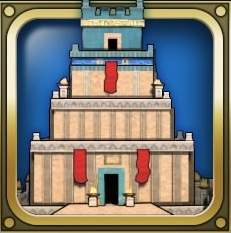
DUR-SHARRUKIN
Wonder of the Ancient Era
Yields
+1 Science in Fortifications in this Settlement. Does not age.
+5 Combat Strength in Fortified Districts.
Acts as a fortified district that must be conquered.
Requirements
Exclusive Principle
of Assyria
Birtūtu
Principle
Discipline
Terrain / Tile
Must be built adjacent to a District.
The Dream Capital of King Sargon II
Dur-Sharrukin, the “Fortress of Sargon”, was built in the 8th century BCE by Sargon II as the new capital of the Assyrian Empire. Conceived as a monumental palace-city, it was an architectural manifesto of power: colossal walls, gates flanked by lamassu —winged protective bulls— and a palace with more than two hundred rooms covered in narrative reliefs. Its almost geometric layout showed the Assyrian obsession with order and state control. It also functioned as a key administrative center, from which the king intended to reorganize his empire and project authority over conquered territories. However, the city barely enjoyed its splendor. After Sargon’s death in battle, his successor moved the court to Nineveh, leaving Dur-Sharrukin unfinished and almost abandoned. Even so, its remains still reveal the ambition and refinement of the Assyrian world.
TERRACOTTA ARMY
Wonder of the Ancient Era
Requirements
Principle
Tactics
Terrain / Tile
Must be built on a Grassland tile.
The Eternal Guard of the First Emperor
Discovered in 1974 near Xi’an, the Terracotta Army was created in the 3rd century BCE to protect China’s First Emperor, Qin Shi Huang, in the afterlife. Thousands of life-sized soldiers —infantry, archers, cavalry, and chariots— were modeled individually, each with unique features and expressions, showcasing an unprecedented artistic and logistical effort. This underground army formed part of a huge funerary complex that recreated the empire in miniature. Its construction mobilized hundreds of artisans, administrators, and laborers under an extremely efficient state system. The work reflects the emperor’s vision: an absolute power able to move immense resources, unite warring states, and project his authority beyond death itself. It remains one of the greatest symbols of the engineering, discipline, and ambition of the Qin dynasty.

El Escorial
Wonder of the Age of Discovery

Yields
+3 😃 Happiness. Does not age.
Provides 3 Relic slots.
+1 Settlement Limit.
+4 😃 Happiness in cities within 7 tiles.
Requirements
Exclusive Principle
of Spain
- Wealth of the New World
- Dominion
Principle
- Colonialism
- Dominion
Terrain / Tile
Must be built on Rugged Terrain.
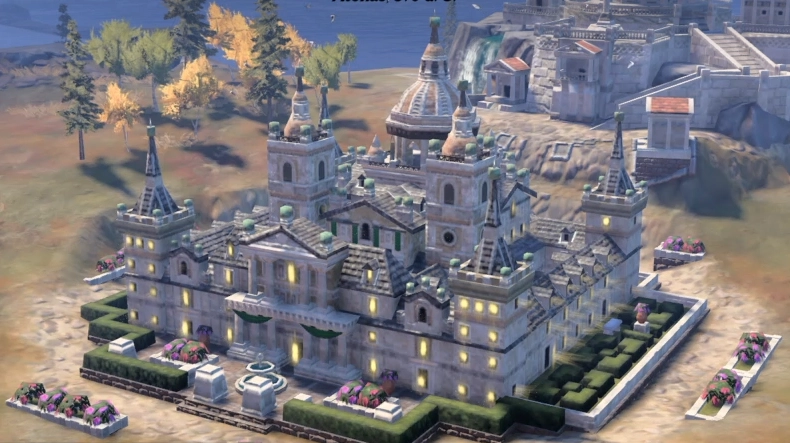
EL ESCORIAL — The Empire Cast in Stone
Built between 1563 and 1584 under Philip II, El Escorial was conceived as monastery, palace, library, basilica, and royal pantheon in a single monumental complex. It embodied the king’s political vision: an ordered, disciplined empire guided by the Catholic faith after the Council of Trent. Its austere architecture, with sober lines and geometric volumes, broke with Renaissance excess and gave rise to the so-called Herrerian style, symbol of the Spanish Monarchy. Beyond serving as a royal residence, El Escorial functioned as a center of learning. Its library brought together Arabic, Latin, and Greek manuscripts, reflecting the intellectual role of the empire. As a dynastic pantheon, it reinforced the continuity of the Habsburgs. El Escorial thus became the physical incarnation of the power and spirituality of Spain’s Golden Age, a political and cultural axis projecting authority across Europe.
Erdene Zuu
Wonder of the Age of Discovery

Yields
+2 Culture. Does not age.
Training a Cavalry unit grants Culture equal to 25% of its Production cost.
Requirements
Exclusive Principle
of Mongolia
Yassa
Principle
- Authority
- Dominion
Terrain / Tile
Must be built on Flat Terrain.
ERDENE ZUU — The Buddhist Echo of Ancient Karakorum
Founded in 1585 by Abtai Sain Khan, Erdene Zuu is considered the first Buddhist monastery of Mongolia after the official adoption of Tibetan Buddhism. It was built near the ruins of Karakorum, the former capital of the Mongol Empire, binding the new religious identity to the glorious imperial past of Genghis Khan. Originally surrounded by more than a hundred white stupas, the complex housed temples, libraries, and a vibrant monastic life that acted as a political and cultural hub. For centuries, Erdene Zuu was a key center for education, diplomacy, and the legitimacy of local khans. Although it suffered destruction in the 20th century, part of its temples survived, and today the monastery stands as a symbol of Mongolian cultural resilience, fusing nomadic tradition, faith, and historical memory within a single sacred enclosure.

Statue of Liberty
Wonder of the Modern Era

Yields
+6 😃 Happiness. Does not age.
Grants 4 Migrant units.
Requirements
Exclusive Principle of
the United States
- War Economy
Principle
- Capitalism
- Dominion
Terrain / Tile
Must be built on a Coast tile adjacent to land.
STATUE OF LIBERTY — The New Lighthouse of the Modern World
Inaugurated in 1886, the Statue of Liberty was a gift from France to the United States, celebrating American independence and the alliance between the two nations. Designed by Frédéric-Auguste Bartholdi with an internal structure by Gustave Eiffel, it quickly became a symbol of republican and democratic ideals. Standing at the entrance to New York Harbor, the statue was the first sight for millions of immigrants arriving in America. Her torch symbolized enlightenment, and her tablet, the law: an invitation to build a new future based on freedom and citizenship. Over time, the Statue of Liberty ceased to be just a national symbol and became a global icon of hope, representing the promise of mobility, rights, and opportunity in the modern age.
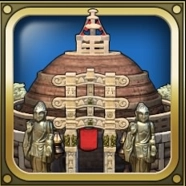
Great Stupa at Sanchi
Wonder of the Ancient Era

Yields
+3 😃 Happiness. Does not age.
+5 Culture for every 5 Happiness in this city.
Requirements
Exclusive Principle of
the Maurya
- Mantriparishad
Principle
- Specialized Professions
Terrain / Tile
Must be built on a Plains tile.
GREAT STUPA AT SANCHI — Spiritual Core of the Mauryan Empire
The Great Stupa at Sanchi, begun in the 3rd century BCE under Emperor Ashoka, is one of the oldest and most emblematic Buddhist monuments in India. After his conversion to Buddhism, Ashoka promoted the construction of stupas across his empire, but Sanchi became the most significant: a sanctuary housing relics and serving as a major pilgrimage center. In later centuries, especially under the Shunga dynasty, the famous torana gateways were added —true sculpted masterpieces that narrate episodes from the Buddha’s life and moral teachings. The circular design represents the eternal cycle of existence, while the vertical axis symbolizes the link between the earthly world and the spiritual realm. For over a millennium, Sanchi was a focal point of practice, art, and religious memory, reflecting both the cultural spread of Buddhism and the intellectual refinement of the Mauryan world.
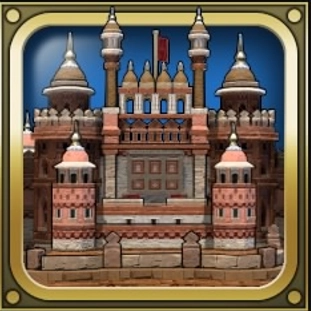
Red Fort
Wonder of the Modern Era

Yields
+4 Gold. +4 Production. Does not age.
Functions as a Fortified District that must be captured.
+50 HP to this District and all City Centers.
Requirements
Exclusive Principle of
Mughal India
- Mansabdari
Technology
- Military Science
Terrain / Tile
Must be built adjacent to a District.
RED FORT — Imperial Jewel of Mughal Power
Built between 1638 and 1648 by Emperor Shah Jahan, the Red Fort in Delhi marked the architectural zenith of the Mughal Empire. Its red sandstone walls, monumental gates, and inner palaces blended Islamic, Persian, and Hindu influences into a unique and majestic style. The complex was not only an imperial residence: it served as an administrative center, dynastic symbol, and ceremonial stage where the emperor presented himself as absolute sovereign. The grand Hall of Public Audience, ornamental fountains, and charbagh gardens reflected the Mughal idea of cosmic order and royal justice. With invasions and shifts in power, the fort gradually lost its political role, but never its historical significance. Today, the Red Fort stands as an icon of Indian identity, a witness to empires, uprisings, and proclamations that shaped the history of the subcontinent.
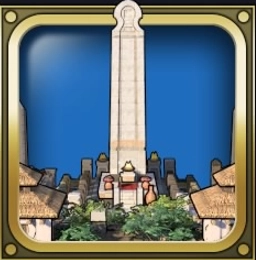
Great Stela
Wonder of the Ancient Era

Yields
+3 😃 Happiness. Does not age.
+5 Culture for every 5 Happiness in this city.
Requirements
Exclusive Principle of
Aksum
- Periplus of the Eritrean Sea
Principle
- Mysticism
- Dominion
Terrain / Tile
Must be built on a Plains tile.
GREAT STELA — The Stone Cry of the Aksumite World
The Great Stela of Axum, in present-day Ethiopia, is one of the most impressive monuments of the ancient Kingdom of Aksum, likely erected around the 4th century CE. Carved from a single block of granite, its form imitates multi-storey buildings, with false doors and windows that symbolize the transition of the deceased into the spiritual world. These stelae marked royal and aristocratic tombs, representing status, lineage, and power. The Great Stela stands out for its colossal size and refined carving technique, reflecting Aksum’s mastery of stonework and its sophisticated funerary system. Although it collapsed in antiquity and was later taken abroad and returned in the 21st century, it remains a symbol of the kingdom’s splendor: a civilization that dominated Red Sea trade routes and acted as a bridge between Africa, Arabia, and the Mediterranean. It is a monumental reminder of the reach and cultural depth of Aksum.

Great Lighthouse
Wonder of the Ancient Era
Requirements
Principle
- Navigation
- Dominion
Terrain / Tile
Must be built on a Coast tile.
GREAT LIGHTHOUSE — Guardian of the Hellenistic Seas
Built on the island of Pharos in the 3rd century BCE, under Ptolemy II, the Great Lighthouse of Alexandria became the most iconic work of Hellenistic engineering. Reaching over 100 meters in height, its three-tiered structure —square base, octagonal middle, and cylindrical top— was crowned by a fire reflected in mirrors that guided ships into the most cosmopolitan harbor of the Mediterranean. More than just a lighthouse, it was a political symbol: it showcased the wealth and sophistication of the Ptolemaic dynasty and reinforced Alexandria’s image as a capital of knowledge, alongside its famous library. For centuries it resisted earthquakes, invasions, and neglect, remaining one of the Seven Wonders of the Ancient World. Its legacy influenced maritime architecture for millennia.
Ha’amonga ‘a Maui
Wonder of the Ancient Era

Yields
+2 Culture. Does not age.
+1 Culture and +1 Food on Fishing Boats in this Settlement.
+1 Cultural Attribute Point.
Requirements
Exclusive Principle
of Tonga
- Kava Ceremony
- Dominion
Principle
- Navigation
Terrain / Tile
Must be built adjacent to Coast.
HA’AMONGA ‘A MAUI — Ancestral Trilithon of the Tongan Realm
Built around the 13th century on Tongatapu, Ha’amonga ‘a Maui —a monumental trilithon made of three massive coral blocks— is one of the most enigmatic symbols of the Tu’i Tonga Empire. Its name links the structure to the Polynesian demigod Maui, though its exact function remains debated. The most accepted theories see it as a ceremonial arch that marked sacred spaces and expressed the authority of the Tu’i Tonga, rulers of one of the most extensive maritime networks in the pre-European Pacific. Other studies suggest it may also have had an astronomical function, aligning with solstices and agricultural cycles. In any case, Ha’amonga ‘a Maui represents social control, advanced navigation, and a Polynesian worldview where lineage, land, and sky formed an inseparable whole. It stands as a monumental testament to a far-reaching seafaring civilization.
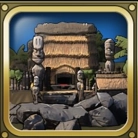
Hale o Keawe
Wonder of the Age of Discovery

Yields
+2 Culture. Does not age.
+1 Culture on Water buildings.
3 slots for Relics.
Requirements
Exclusive Principle
of Hawai
- Heʻe nalu
- Dominion
Principle
- Inspiration
Terrain / Tile
Must be built on a Plains tile adjacent to at least one Quarry.
HALE O KEAWE — The Sacred House of Hawaiian Chiefs
Located in Hōnaunau on the Big Island of Hawai‘i, Hale o Keawe was built in the 17th century as a royal mausoleum for the ali‘i Keawe-i-Kekahi-ali‘i-o-ka-moku. The complex was a heiau, a sacred temple where the remains of high chiefs were kept, considered a source of mana — the spiritual energy that legitimized political power. Surrounded by black lava walls and guarded by carved wooden ki‘i figures, the temple served for generations as a religious and political center of the kingdom, hosting rituals, oaths, and ceremonies that reinforced the Hawaiian social order. After the sociopolitical changes of the 19th century, the temple was dismantled and later reconstructed to preserve its cultural value. Today it represents the living memory of the ali‘i system and the deep spirituality of ancient Hawai‘i.
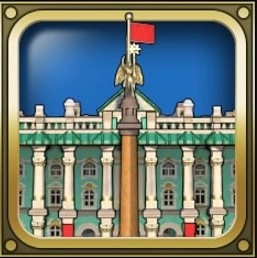
HERMITAGE
Wonder of the Modern Era

Yields
+4 Culture. Does not age.
+5 Culture in Settlements that have a Great Work on display.
Grants 3 slots for Artifacts.
Requirements
Exclusive Principle
of Russia
- Table of Ranks
Principle
- Modernization
Terrain / Tile
Must be built on a Tundra tile.
HERMITAGE — The Imperial Sanctuary of Russian Art
Founded in 1764 by Catherine the Great, the Hermitage began as a private space within the Winter Palace, intended to house the empress’s personal collection. That “little hermitage” —from which it takes its name— quickly became a symbol of the Russian Empire’s cultural power. Catherine gathered thousands of European works, from Italian and Flemish masters to classical sculptures, positioning Russia as heir to Western art. Over the 19th and 20th centuries, the Hermitage expanded into a vast complex of Baroque and Neoclassical palaces along the Neva River. It survived wars, revolutions, and sieges, protecting its treasures through massive evacuation and restoration efforts. Today it is one of the largest art collections in the world, a testament to imperial Russian ambition and its role as a bridge between Europe and Eurasia.
Eram Garden
Wonder of the Modern Era
Yields
+3 Culture in this Settlement.
+1 Influence per turn.
+25% Production when building other Wonder Districts in this Settlement.
Requirements
Exclusive Principle
of Russia
- Table of Ranks
Principle
Terrain / Tile
Must be built on a Plains tile adjacent to at least one Quarry.
ERAM GARDEN — Persian Paradise Made Real
Eram Garden, in Shiraz, embodies the essence of the Persian garden, a tradition dating back to the Achaemenid Empire that symbolizes cosmic order through water, shade, and geometry. Although its current form dates from the 18th–19th centuries, its aesthetic roots are much older: the idea of pairidaeza, origin of the word “paradise.” With channels dividing the space into quadrants, tall cypress trees, and a stately pavilion decorated with tiles, Eram became a refuge for poets, scholars, and nobles from the Fars region. Its design sought to recreate the ideal garden of the Qur’an and the Persian tradition: a microcosm of harmony, contemplation, and balance. Eram survived dynasties and political change, remaining one of the purest expressions of Iranian landscape art.
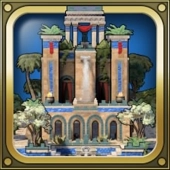
Hanging Gardens
Wonder of the Ancient Era
Requirements
Principle
- Irrigation
Terrain / Tile
Must be built adjacent to a River.
HANGING GARDENS — Babylon’s Green Dream
The Hanging Gardens of Babylon, described by Greek authors from the 3rd century BCE onward, are the most enigmatic wonder of the ancient world. Traditionally attributed to Nebuchadnezzar II (6th century BCE), they were said to be a series of raised terraces covered with trees, flowers, and palms, irrigated by complex hydraulic systems. Although their physical existence is still debated —some historians believe they may actually have been in Nineveh— the gardens became a symbol of Mesopotamia’s ability to master water and turn desert into monumental oasis. They represented royal power, fertility, and the Babylonian ideal of harmony between urban design and nature. Their myth endures because they embody the ambition of the first civilizations: to create life where it seemed impossible, and to do so with refinement worthy of kings.
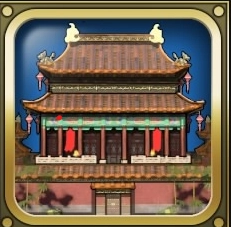
The Forbidden City
Wonder of the Age of Discovery

Yields
+4 Culture. Does not age.
+1 Culture and +1 Gold on all Fortification, Improvement, and Wonder buildings.
Requirements
Exclusive Principle
of Ming China
- Da Ming Lu
- Dominion
Principle
- Imperialism
- Dominion
Terrain / Tile
Must be built adjacent to a District.
THE FORBIDDEN CITY — The Heart of the Celestial Empire
Built between 1406 and 1420 under the Yongle Emperor of the Ming dynasty, the Forbidden City became the absolute center of Chinese power for nearly five centuries. More than 900 buildings, perfectly aligned according to feng shui principles, formed a closed universe where the emperor ruled as the “Son of Heaven.” Access was tightly controlled: only high-ranking officials, concubines, and servants could cross its gates, and every hall had a ritual function that legitimized imperial authority. Under the Qing dynasty, the complex was further expanded and refined, hosting ceremonies, imperial exams, and decisions that affected millions of subjects. Despite invasions, fires, and political upheavals, the Forbidden City survived as a symbol of order, continuity, and bureaucratic sophistication. It is the best physical testament to the longest-lasting imperial system in the world.
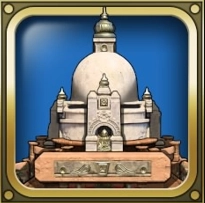
Nalanda
Wonder of the Ancient Era
Requirements
Principle
- Literacy
Terrain / Tile
Must be built on a Plains tile.
NALANDA — The Great University of the Ancient World
Founded in the 5th century CE in northern India, Nalanda was far more than a monastery: it became the first residential university in history. Thousands of monks, philosophers, and students arrived from China, Tibet, Korea, and Southeast Asia to study logic, medicine, mathematics, astronomy, and, above all, the various schools of Mahayana Buddhism. The complex housed gigantic libraries such as Ratnasagara and Ratnodadhi, described as true oceans of knowledge. It is said that they took months to burn when they were destroyed in the 12th century during the Muslim invasions. Nalanda was Asia’s intellectual center for almost 700 years, an institution that shaped the philosophy, science, and spirituality of the continent. Its influence spread along the Silk Road and marked entire generations of thinkers.
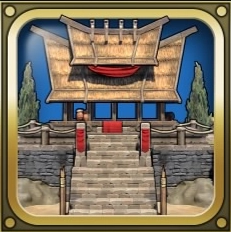
Nan Madol
Wonder of the Age of Discovery
Requirements
Principle
- Feudalism
Terrain / Tile
Must be built on a Coast tile on an Island.
NAN MADOL — The Megalithic Venice of the Pacific
Located on Pohnpei, Micronesia, Nan Madol is a ceremonial complex built between the 13th and 17th centuries by the Saudeleur dynasty. Raised on small artificial islets linked by canals, the city functioned as the political and religious center of the kingdom. Its huge basalt walls, some weighing several tons, were transported without metal, wheels, or draft animals, something that still fuels debate among archaeologists.
Nan Madol was divided into compounds for rituals, noble residences, and administrative spaces, showing an exceptional level of organization for an oceanic civilization. It represented the almost divine power of the Saudeleur rulers, who governed through a strict theocratic system.
After their fall, the site was abandoned and wrapped in legend, but it remains one of the most enigmatic and extraordinary constructions in the Pacific.

Notre Dame
Wonder of the Age of Discovery
Requirements
Principle
- Social Classes
- Dominion
Terrain / Tile
Must be built adjacent to a River and a District.
NOTRE DAME — The Cathedral that Forged the Soul of France
Begun in 1163 under Bishop Maurice de Sully, Notre Dame de Paris became one of the crowning achievements of European Gothic architecture. With its flying buttresses, sculpted façade, and iconic towers, it represented both the power of the Church and the urban ambition of a city emerging as the political center of the French kingdom.
For centuries it hosted coronations, processions, royal funerals, and events that shaped the country’s identity. The cathedral also became an architectural model across Europe, and its construction mobilized generations of artisans, masons, and guilds.
From its 19th-century restoration—fueled by Romanticism and Victor Hugo’s work—to the fire of 2019, Notre Dame has embodied French cultural resilience. It is a monument where faith, monarchy, revolution, and urban rebirth intersect.
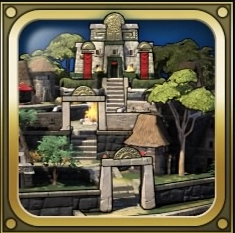
Machu Picchu
Wonder of the Age of Discovery

Yields
+3 Gold. Does not age.
+1 Culture and +1 Gold for buildings adjacent to Mountains.
Requirements
Exclusive Principle
of the Inca
- Mit’a
- Dominion
Principle
- Urban Planning
Terrain / Tile
Must be built on Grassland or Tropical Mountain.
MACHU PICCHU — The Sacred Jewel of the Inca World
Built in the mid-15th century under Pachacuti, Machu Picchu was a ceremonial, agricultural, and astronomical complex high in the Andes, perfectly integrated into its natural setting. Its terraces, temples, and canals showcase Inca mastery of hydraulic engineering and cyclopean stonework, adapted to steep terrain yet ideal for growing maize and coca.
The site functioned as a religious retreat and political center tied to the imperial cult of the sun. Its strategic location, among mountains considered sacred (apus), reinforced the spiritual character of the empire.
After the Inca collapse and the arrival of the Spanish, Machu Picchu was abandoned and swallowed by the jungle, remaining hidden until its “rediscovery” in 1911. Today it is a universal symbol of Andean sophistication and of harmony between architecture and landscape.
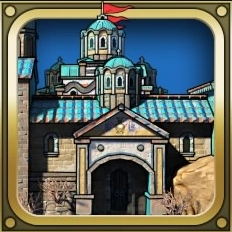
Rila Monastery
Wonder of the Age of Discovery
Yields
+4 Culture. Does not age.
3 slots for Relics.
Receive 1 Relic for each Wonder you build, including this one.
Requirements
Exclusive Principle
of Bulgaria
- Tarnovo Schools
Principle
- Heraldry
Terrain / Tile
Cannot be built adjacent to a District.
RILA MONASTERY — The Spiritual Bastion of the Bulgarian World
Founded in the 10th century by Saint John of Rila, the monastery became the religious and cultural heart of medieval Bulgaria. Hidden in the Rila Mountains, it served as a refuge for monks, scholars, and artists who preserved manuscripts, liturgy, and Bulgarian traditions even under Ottoman rule.
Its current form, rebuilt in the 18th and 19th centuries, combines defensive walls, vibrant frescoes from the Bulgarian National Revival, and a central church whose iconography condenses centuries of Orthodox spirituality.
During the darkest periods, the monastery acted as guardian of national identity, educating clergy and cultural leaders. More than a temple, it is a symbol of survival and rebirth—a pillar of Bulgarian memory that still resonates today.
Serpent Mound
Wonder of the Age of Discovery

Yields
+3 Culture in this settlement.
+1 Influence per turn.
+25% Production when constructing other Wonder Districts in this settlement.
Requirements
Exclusive Principle
of the Shawnee
- Maleki Kintake
Principle
Terrain / Tile
Must be built on a Plains tile adjacent to at least one Quarry.
SERPENT MOUND — From the Adena to the Shawnee: A Living Legacy
The Great Serpent Mound in Ohio is one of the masterpieces of pre-Columbian earthwork engineering. Built around the 11th century by communities linked to the Adena tradition—experts in ceremonial mounds and earth-based cosmology—it depicts an undulating serpent over 400 meters long, ending in a circle interpreted as an egg or solar symbol. Its layout seems aligned with solstices and lunar cycles, suggesting ritual use tied to time, fertility, and world renewal.
Centuries later, when Algonquian peoples including the Shawnee occupied the region, the mound remained a sacred landscape. Although they did not build it, they inherited it as a space filled with myth and territorial memory. For the Shawnee, structures like this connected living nations with the “Ancients,” reinforcing their spiritual bond with the land.
An ancestral work that unites cultures separated by millennia under the same sacred horizon.
Mundo Perdido
Wonder of the Age of Antiquity

Yields
+1 Science in Improvements and +1 😃Happiness in Districts in this settlement.
Does not age.
Requirements
Exclusive Principle
of the Maya
- Calendar Round
- Dominion
Principle
- Code of Laws
- Dominion
Terrain / Tile
Must be built on a Tropical tile.
MUNDO PERDIDO — The Oldest Ceremonial Core of Tikal
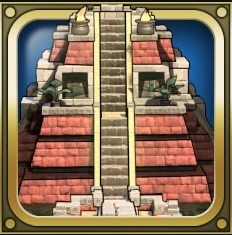
The Mundo Perdido complex in the ancient Maya city of Tikal is one of the oldest and most enigmatic ceremonial groups in Mesoamerica. Its origins date back to the Preclassic period (4th century BCE), when Tikal was just beginning to consolidate itself as a regional power. At its center stands a massive temple-pyramid that evolved for over a thousand years, with successive construction phases reflecting shifts in power, dynasties, and ritual practice.
Mundo Perdido functioned as a solar observatory: its platforms and structures align with solstices and equinoxes, allowing priests to mark agricultural and ceremonial calendars. It was a space reserved for elites, priests, and rulers, where rituals were performed to legitimize the cosmic and political order of the kingdom.
Even when Tikal reached its Classic-era peak, Mundo Perdido remained an ancestral sanctuary that connected its rulers to the sacred Maya past.
Muzibu Azaala Mpanga
Wonder of the Modern Era

Yields
+4 Food. Does not age.
+4 Culture and +4 Food in Improvements and Districts on Lake tiles.
Requirements
Exclusive Principle
of Buganda
- Nnalubaale
- Dominion
Principle
- Natural History
Terrain / Tile
Must be built adjacent to a Lake.
MUZIBU AZAALA MPANGA — The Spiritual Palace of the Kingdom of Buganda
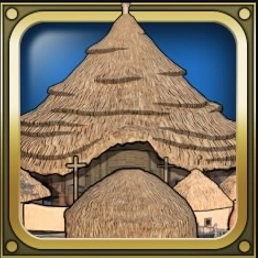
Located in Kasubi, Uganda, Muzibu Azaala Mpanga is the traditional mausoleum of the kabaka, the kings of the historic Kingdom of Buganda. Built originally in the 19th century, it is one of Central Africa’s greatest architectural achievements: a vast circular structure of reed, wood, and thatch using ancestral techniques without metal or nails.
This was not only a royal tomb; it functioned as a political, spiritual, and ceremonial center, guarding the remains of kabaka regarded as guardians of the balubaale, the spiritual world. Its custodians maintained rituals that linked the monarchy with the fertility of the land, the legitimacy of power, and the protection of the people.
Despite fires and conflict, the mausoleum has been rebuilt time and again, becoming a powerful symbol of Baganda identity. It is a living reminder of a monarchical tradition that has endured in Africa for centuries.
Oracle
Wonder of the Age of Antiquity

Yields
+2 Culture. Does not age.
+20 Culture per Era when receiving rewards from Narrative Events.
+1 Wildcard Attribute Point.
Requirements
Exclusive Principle
of Greece
- Symmachy
- Dominion
Principle
- Public Life
Terrain / Tile
Must be built on Rough Terrain.
ORACLE — The Sacred Voice that Guided Civilizations
Many peoples had oracles, but the most famous was the Oracle of Delphi, a panhellenic sanctuary dedicated to Apollo and active from the 8th century BCE to Late Antiquity. There, the priestess Pythia delivered her responses in a trance, later interpreted by priests. These consultations were far from mere superstition: they influenced diplomatic decisions, the founding of colonies, treaties, military campaigns, and affairs of state.
The temple stood above a fissure considered a point of contact between the human and the divine, reinforcing the aura of authority surrounding the site. For centuries, kings, generals, and common citizens alike made pilgrimages to obtain moral or political guidance.
More than a temple, the Oracle was a symbolic center of power, capable of uniting the Hellenic world under a shared spiritual tradition. It embodies the deep intersection of religion, politics, and destiny in the ancient world.

Palace of Fine Arts
Wonder of the Modern Era

Yields
+5 Culture. Does not age.
+1 Artifact. Provides 3 slots for Artifacts.
+3 😃Happiness from Great Works.
Requirements
Exclusive Principle
of Greece
- Political Plans
- Dominion
Principle
- Globalization
- Dominion
Terrain / Tile
Must be built on a Plains tile adjacent to at least one Quarry.
PALACE OF FINE ARTS — Mexico’s Modern Era Wonder
Inaugurated in 1934, the Palace of Fine Arts symbolizes Mexico’s transition into modernity after the Revolution. Construction began in 1904, under the Porfirian regime, with an Art Nouveau design by architect Adamo Boari, but political turmoil and technical problems delayed the project for three decades. The final result blends a white Italian-marble exterior with Art Deco interiors, creating one of the most unique architectural fusions on the continent.
The Palace quickly became the stage for Mexico’s 20th-century cultural identity. Operas, ballets, concerts, and premieres that defined the country’s artistic life debuted there. Its murals—by Rivera, Siqueiros, Orozco, and others—turned the building into a visual manifesto of the post-revolutionary spirit.
More than a theatre, it is Mexico’s cultural lighthouse: a modern Wonder that binds art, politics, and nationhood.
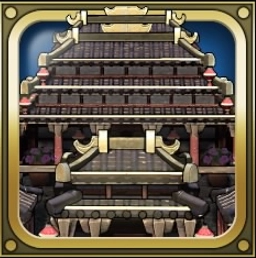
Weiyang Palace
Wonder of the Age of Antiquity

Yields
+6 Influence. Does not age.
Requirements
Exclusive Principle
of Han China
- Junzi
Principle
- Citizenship
- Dominion
Terrain / Tile
Must be built on a Grassland tile.
WEIYANG PALACE — Administrative Heart of the Han Empire
Built in 200 BCE in Chang’an, Weiyang Palace was the political center of the Han Empire and one of the largest palace complexes ever constructed. Its scale was immense: audience halls, ritual courtyards, and administrative buildings formed a ceremonial labyrinth where the emperor exercised his authority as “Son of Heaven.”
Weiyang symbolized the new imperial order after the unification of China, and from its precincts tax systems, censuses, trade routes, and diplomatic expansion into Central Asia were all managed. It was also a key stage for Confucian thought, whose principles guided Han bureaucracy for centuries.
Although the palace vanished after invasions and dynastic change, its foundations reveal the urban sophistication of ancient Chang’an, one of the most influential cities of the premodern world.
Petra
Wonder of the Age of Antiquity
Requirements
Principle
- Code of Laws
Terrain / Tile
Must be built on a Desert tile.
PETRA — The rock-cut Wonder of the Nabataean world
Founded by the Nabataeans around the 4th century BCE, Petra thrived as a key commercial hub linking Arabia, Egypt, and the Mediterranean. Its uniqueness lies in its architecture carved directly into red sandstone cliffs: temples, monumental tombs, and Hellenistic-style façades that blend Arab, Greek, and Near Eastern influences.
The Treasury and the Monastery, its most famous structures, showcase Nabataean mastery of hydraulics, stone carving, and urban planning. Petra survived thanks to sophisticated systems of channels, cisterns, and dams that turned a desert valley into an urban oasis.
After caravan trade declined, the city was abandoned and remained largely forgotten until the 19th century. Today it stands as one of the most impressive architectural legacies of the ancient world, a testament to the ingenuity and wealth of the Nabataean kingdom.
Pyramids
Wonder of the Age of Antiquity

Yields
+1 Gold and +1 Production on Improvements and Districts on River tiles in this settlement.
Does not age.
Requirements
Exclusive Principle
of Egypt
- Light of Amun-Ra
Principle
- Masonry
Terrain / Tile
Must be built adjacent to a Navigable River that is not in Tundra.
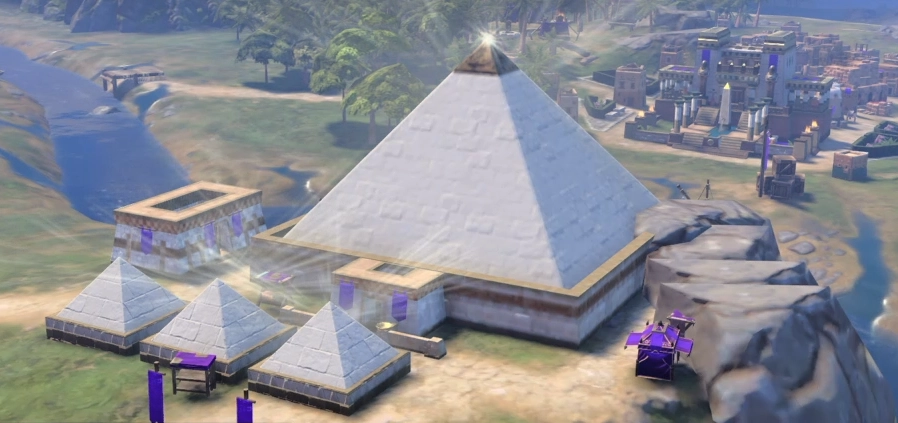
THE PYRAMIDS OF GIZA — Eternal Wonder and Manifesto of Pharaonic Power
The Egyptian Pyramids represent the culmination of a tradition that began in the 3rd Dynasty and reached perfection in the 4th. These monumental structures were royal tombs, but also political statements: visible symbols of the bond between the pharaoh and the gods, anchored in a belief in life after death.
The Great Pyramid of Khufu, built around 2560 BCE, was the largest human-made structure for millennia. Its geometric precision, astronomical alignment, and the logistics required to move millions of stone blocks reveal the organizational power of the Egyptian state.
The pyramids cemented the Nile civilization model: centralized, ritualized, and led by a deified sovereign. They are the ultimate expression of how architecture and cosmology could sustain an entire empire.
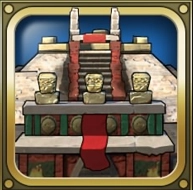
Pyramid of the Sun
Wonder of the Age of Antiquity
Requirements
Exclusive Principle
Principle
- Mathematics
Terrain / Tile
Must be built on a Plains tile adjacent to a District.
PYRAMID OF THE SUN — Monumental Heart of Teotihuacan
Built around the 2nd century CE, the Pyramid of the Sun dominates the urban axis of Teotihuacan, one of the most influential cities in Mesoamerica. Its symmetrical plan and imposing height reflect a highly organized state project, capable of mobilizing massive labor and advanced architectural knowledge.
The pyramid rises above a ritual tunnel that likely referred to the Mesoamerican creation myth, linking the monument to the birth of the cosmos and the sacred role of the city. Although no direct inscriptions have been found, evidence suggests it was a ceremonial center dedicated to solar and fertility forces essential to Teotihuacan’s political legitimacy.
For centuries, its presence inspired later peoples such as the Mexica, who believed it to be the work of giants. The Pyramid of the Sun is, at its core, the monumental footprint of a mysterious yet extraordinarily sophisticated civilization.
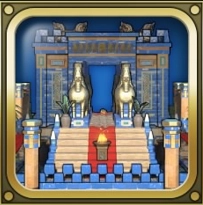
GATE OF ALL NATIONS
Wonder of the Age of Antiquity
Yields
+2 Happiness. Does not age.
+1 War Support in all wars.
Requirements
Exclusive Principle
of Persia
- Satrapies
Principle
- Discipline
- Dominion
Terrain / Tile
Must be built adjacent to a District.
GATE OF ALL NATIONS — The ceremonial entrance to the Persian Empire
Erected under Xerxes I in the 5th century BCE, this Wonder marked the main access to Persepolis, the ceremonial capital of the Achaemenid Empire. Flanked by colossal winged bulls inspired by Mesopotamian traditions, the gate symbolized the authority of the “King of Kings” and the unity of an empire stretching from Egypt to Central Asia.
Delegations from subject peoples arrived there during the New Year festival, bringing tribute and renewing their loyalty. Trilingual inscriptions highlighted the empire’s diversity and its highly advanced administrative system.
The Gate of All Nations functioned as a diplomatic stage and ritual threshold: the point where visitors passed from the outer world into the ideological heart of Persia. A monument that embodied Achaemenid ambition and cosmopolitanism.
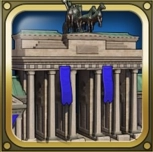
Brandenburg Gate
Wonder of the Modern Age

Yields
+6 Production. Does not age.
+1 War Support in all wars.
+1 to Settlement Limit.
Requirements
Exclusive Principle
of Prussia
- Ems Dispatch
Principle
- Militarism
- Dominion
Terrain / Tile
Must be built adjacent to a District.
BRANDENBURG GATE — The first Wonder of “modern” Germany
Built between 1788 and 1791 by order of King Frederick William II, the Brandenburg Gate was conceived as a monumental entrance to neoclassical Berlin. Inspired by the Propylaea of the Acropolis, it proclaimed Prussian prestige in an age of enlightened reforms. Above it, the quadriga of the goddess Victory became an emblem of military power and national pride.
Over the following centuries, the gate stood witness to Europe’s great turning points: taken by Napoleon, celebrated by the German Empire, isolated in the no-man’s-land of the Cold War, and finally turned into a symbol of reunification in 1989.
Few structures have accompanied so many political transformations while preserving their identity. The Brandenburg Gate embodies German resilience and the ability of a civilization to reinvent itself without losing its memory.
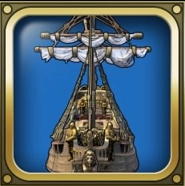
Port of Havana
Wonder of the Age of Discovery

Yields
+3 Gold. Does not age.
Generates Treasure Convoys with 3 Treasure Fleet points.
+1 Economic Attribute Point.
Requirements
Exclusive Principle
of the Republic of the Pirates
- Ports of Call
- Dominion
Principle
- Naval Construction
- Dominion
Terrain / Tile
Must be built on Coast in Far Lands.
PORT OF HAVANA — Imperial stronghold and Republic of the Pirates
Founded in the 16th century, the Port of Havana quickly became the maritime jewel of the Spanish Empire in the Caribbean. Its strategic position allowed treasure fleets bound for Seville to assemble there, turning it into a vital node of transatlantic trade. Fortifications such as El Morro and La Cabaña defended a harbor full of shipyards, workshops, warehouses, and intense commercial activity.
But its history is also marked by the “Republic of the Pirates”: French, English, and Dutch privateers stalked its routes, attacked convoys, and forced Spain to develop complex defensive systems. Havana became a geopolitical chessboard where empire, smuggling, and naval warfare coexisted daily.
Over the centuries, the port evolved from colonial bastion to modern trade hub, maintaining its role as one of the most influential maritime enclaves in the hemisphere.
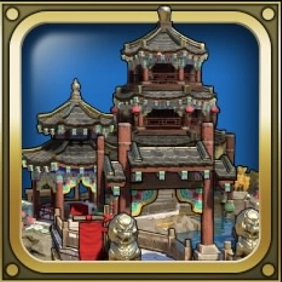
Mountain Resort of Chengde
Wonder of the Modern Age

Yields
+6 Gold. Does not age.
+5% Culture for each civilization you have a trade route with.
Requirements
Exclusive Principle
of Qing China
- Stable Frontier
Principle
- Hegemony
- Dominion
Terrain / Tile
Must be built adjacent to a Mountain.
MOUNTAIN RESORT OF CHENGDE — The imperial retreat of the Qing dynasty
Built between 1703 and 1792, the Mountain Resort of Chengde was the grand summer retreat of the Qing emperors. Set in a landscape of hills, lakes, and grasslands, it combined palaces, gardens, and temples that reproduced in miniature the diverse architectural styles of the empire, from classical Chinese to Tibetan and Mongolian influences.
Chengde was not just a seasonal refuge, but also a key diplomatic center. There, emperors received Mongol, Tibetan, and Manchu leaders to reinforce the alliances that sustained the Qing multiethnic state. The outer temples —such as Puning Si— symbolized imperial authority over different religious traditions.
This vast complex embodied the idea of an empire harmonized under a single sovereign. Chengde is, in essence, a political map transformed into an imperial landscape.

Shwedagon Zedi Daw
Wonder of the Age of Discovery
Requirements
Principle
- Education
Terrain / Tile
Must be built adjacent to a Lake.
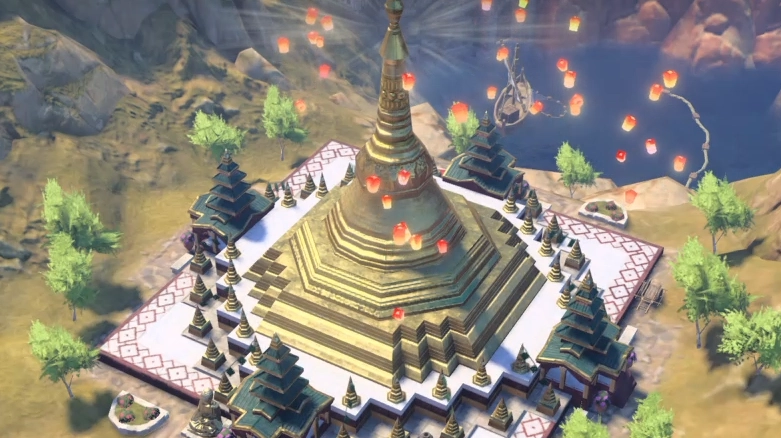
SHWEDAGON ZEDI DAW — The golden reliquary of Burmese Buddhism
With over a thousand years of history, the Shwedagon Zedi Daw rises atop Singuttara Hill as the most sacred shrine in Burma (Myanmar). According to tradition, it holds relics of four Buddhas, which made it the spiritual epicenter of the country from the 11th century onward, during the rise of the Pagan Kingdom.
The golden stupa —covered in thousands of gold plates and crowned by a hti studded with precious stones— symbolizes the accumulation of religious merit and the legitimacy of Burmese kings. Across the centuries, successive dynasties restored and expanded the complex, turning it into a stage for oaths, processions, and political renewal.
During British colonial rule, Shwedagon also became a gathering place for nationalist movements. It is a monument that unites faith, identity, and resistance—a spiritual beacon visible across Yangon.
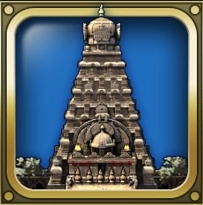
Brihadisvara Temple
Wonder of the Age of Discovery

Yields
+3 Influence. Does not age.
+1 😃Happiness in buildings adjacent to Navigable Rivers.
Requirements
Exclusive Principle
of Chola
- Monsoon Winds
Principle
- Diplomatic Corps
Terrain / Tile
Must be built adjacent to a River, navigable or not.
BRIHADISVARA TEMPLE — The Wonder of the Chola kings
Built in Thanjavur around 1010 CE by King Rajaraja I, the Brihadisvara Temple is one of the high points of Dravidian art and of the Chola Empire’s power. Its vimana tower, over 60 meters high, was carved with monumental precision and crowned with a monolithic granite block whose placement remains a technical marvel.
Dedicated to Shiva, the temple functioned as both liturgical and political center: priests, artisans, and administrators formed a complex institution that reflected the empire’s organization. Its murals and sculptures narrate military victories, royal genealogies, and mythological scenes that legitimized Chola maritime expansion in the Indian Ocean.
The Brihadisvara Wonder survived wars, invasions, and dynastic changes, remaining one of the most emblematic living temples of southern India.
Thành Huế
Wonder of the Age of Discovery

Yields
+3 Culture in this Settlement.
+1 Influence per turn.
+25% Production when constructing other Wonder Districts in this Settlement.
Requirements
Exclusive Principle
of Đại Việt
- Thành Hoàng
Principle
Terrain / Tile
Must be built in Desert.
THÀNH HUẾ — The imperial Wonder of the Nguyễn dynasty
Built from 1804 under Emperor Gia Long, Thành Huế was the fortified capital of the last Vietnamese kingdom, inspired by the geometric principles of the Forbidden City and by Vauban-style defensive techniques. Its walls, moats, and monumental gates protected a complex of palaces, temples, and ritual enclosures where the emperor exercised centralized, ceremonial power.
The Purple Forbidden City, at the fortress’s heart, hosted Confucian rituals, imperial audiences, and ancestor worship, all pillars of Nguyễn ideology.
During French colonialism and the wars of the 20th century, the Huế Wonder suffered heavy damage, but much of its structure has been restored, revealing the political and aesthetic sophistication of imperial Vietnam. Thành Huế is today a symbol of national identity and cultural memory at the heart of the country.

Eiffel Tower
Wonder of the Modern Age

Yields
+5 Culture. Does not age.
+3 Culture and 😃Happiness in the Neighborhoods of this city.
Requirements
Exclusive Principle
of the French Empire
- Code Civil des Français
Technology
- Radio
Terrain / Tile
Must be built adjacent to a District.
EIFFEL TOWER — The banner of French modernity
Built for the 1889 Exposition Universelle, the Eiffel Tower was conceived by Gustave Eiffel as a demonstration of the industrial ingenuity of modern France. In an age marked by technological competition between powers, its 300-meter metal structure —a world record for decades— became a symbol of engineering dominance.
Although initially criticized by artists and academics, the tower ultimately came to represent the transition to a world in which steel, electricity, and science defined national identity. During the 20th century, its role evolved: it served as a military antenna, broadcast radio signals, and became a strategic point in both world wars.
Today, beyond being a tourist icon, the Eiffel Tower embodies the spirit of a civilization that embraced progress as its new creed.
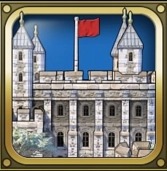
White Tower
Wonder of the Age of Discovery

Yields
+4 😃Happiness. Does not age.
+4 😃Happiness in this Settlement for each Tradition assigned to the Government.
Requirements
Exclusive Principle
of the Normans
- Domesday Book
- Domain
Principle
- Sovereignty
- Domain
Terrain / Tile
Must be built adjacent to a Town Hall.
WHITE TOWER — The Norman fortress that shaped England
The White Tower, built around 1078 by William the Conqueror, is the core of the Tower of London and one of the most iconic Norman fortresses in Europe. Its massive stone walls—over four meters thick—symbolized the authority of the new regime over recently conquered England.
For centuries it served as palace, armory, prison, and repository of royal documents. Decisions that shaped administration, politics, and dynastic succession were made within its walls. Its chapel dedicated to St. John the Evangelist reflects the fusion of military power and spiritual legitimacy typical of the Norman state.
The White Tower stands as the cornerstone of centralized English power—a monument witnessing monarchies, intrigues, and legends that still define the identity of the nation.
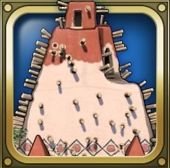
Tomb of Askia
Wonder of the Age of Discovery

Yields
+3 Gold. Does not age.
+2 Gold and +1 Production for each resource assigned in this Settlement.
+2 Resource Capacity in this Settlement.
Requirements
Exclusive Principle
of Songhai
- Desert Ships
Principle
- Mercantilism
Terrain / Tile
Must be built in Desert.
TOMB OF ASKIA — Monumental legacy of the Songhai Empire
Built in 1495 in Gao by Askia Mohammad I after his pilgrimage to Mecca, the Tomb of Askia blends Sahelian mud architecture with Islamic prestige, reinforcing the legitimacy of a newly Islamized empire.
The complex included a mosque, cemetery and ceremonial spaces, operating as the political and religious center of the most powerful West African empire of its time. From here, Songhai controlled trade routes connecting the Niger River to the Sahara, driving an economy based on gold, salt, and scholarship.
The Tomb of Askia stands today as one of the Sahel’s most imposing monuments, a testament to the cultural and political greatness projected by Songhai during its brief but brilliant dominance.
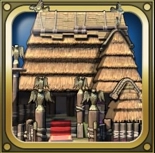
Monk’s Mound
Wonder of the Ancient Era

Yields
+3 Food. Does not age.
+4 Resource Capacity in this Settlement.
Requirements
Exclusive Principle
of the Mississippians
- Earthworks
- Domain
Principle
- Trade
Terrain / Tile
Must be built adjacent to a River.
MONK’S MOUND — The silent giant of Cahokia
Monk’s Mound, located at the archaeological site of Cahokia (in present-day Illinois), is the largest earthen structure ever built by a pre-Columbian civilization north of Mexico. Raised between the 10th and 12th centuries by Mississippian peoples, this pyramidal mound rose more than 30 meters high and had a base larger than that of the Great Pyramid of Giza.
It served as a ceremonial platform, elite residence, and political center of a city that may have surpassed 15,000 inhabitants, making it one of the largest urban centers in the Americas of its time. Its construction required complex social organization, capable of mobilizing massive labor and managing agricultural resources across a territory linked by river routes.
Monk’s Mound reveals the level of planning, hierarchy, and ritual symbolism achieved by Cahokia—a civilization that flourished through intensive agriculture, trade, and a deep worldview that bound sky and earth together.
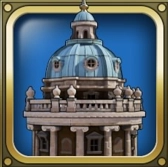
University of Oxford
Wonder of the Modern Era
Requirements
Technology
- Academicism
Terrain / Tile
Must be built adjacent to a District.
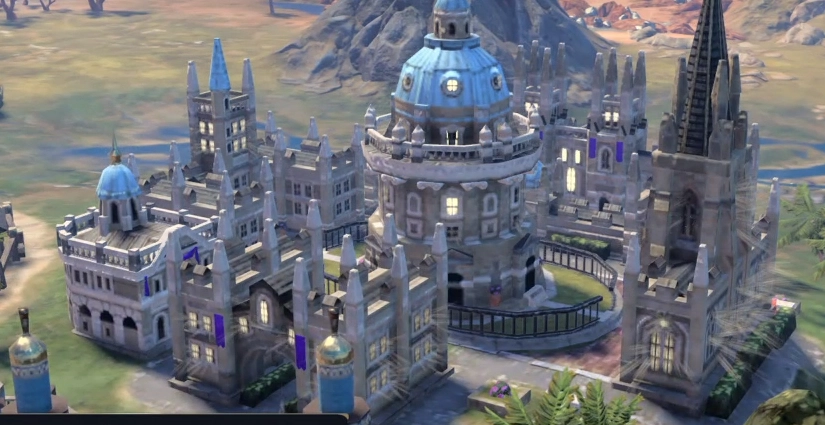
UNIVERSITY OF OXFORD — The intellectual beacon of the West
The University of Oxford, with roots going back to the 12th century, is one of the oldest and most prestigious academic institutions in the world. It arose organically when masters and students began gathering to teach independently, forming an intellectual core that soon gained royal and ecclesiastical support.
During the Middle Ages, Oxford became a leading center for the study of theology, philosophy, law and the sciences, generating debates that shaped European thought. In later centuries, it led advances in astronomy, medicine, chemistry and politics, with key figures from Roger Bacon to modern scholars.
Its colleges, whose architecture ranges from Gothic to Neoclassical, reflect centuries of tradition, academic autonomy and intellectual rivalry.
More than an educational institution, Oxford is a wonder of knowledge—a cultural heart that has influenced empires, sciences and entire generations.