
Leaders in Civilization VII
Ada Lovelace

From an early age, Ada Lovelace viewed the world through the eyes of a scientist. She carved a path between intellectual rigor and imagination, applying her mathematical mind to the most cutting-edge experiments of the 19th century. She worked with mechanical computers, which performed calculations through gears and punch cards, and designed the first software program—illuminating the field of computing more than a century before technology would catch up with her vision.
Exclusive Ability
Enchanter of Numbers: Cities gain increased Science per Era when completing a Principles Domain. This resets at the start of each Era. Gain Culture equal to a percentage of total Science per turn when completing a Technologies Domain.
Agendas
Analytical Engine: Slightly improves Relations with the leader who has the most Domains. Slightly worsens Relations with the leader who has the fewest Domains.
Recommended Civilizations
Antiquity

Greece
(Geographic Option)

Rome
(Geographic Option)
Age of Discovery

The Normans
(Historical Option)

Abbasids
(Strategic Option)
Modern Era

Great Britain
(Historical Option)

Russia
Amina

From childhood, Ada Lovelace examined the world with the eyes of a scientist. She forged a path between intellect and imagination, applying her mathematical mind to the most cutting-edge experiments of the 19th century. She worked with mechanical computers that performed calculations through gears and punch cards, and designed the first software program—illuminating the field of computing more than a century before technology caught up with her vision.
Exclusive Ability
Warrior Queen of Zazzau: Increases resource capacity in Cities. Increases Gold per Era for each Resource assigned to Cities. Increases Combat Strength of all Units on Plains and Desert tiles.
Agendas
Desert of the Warrior Queen: If the player has more Settlements on Plains or Desert tiles than Amina, Relations worsen by a Moderate amount. If the player has no Settlements on Plains or Desert tiles, Relations improve by a Small amount.
Recommended Civilizations
Antiquity

Aksum
(Geographic Option)

Egypt
(Geographic Option)
Age of Discovery

Songhai
(Geographic Option)
Abbasids
(Strategic Option)
Modern Era

Buganda
(Historical Option)

Mexico
Ashoka, World Healer
Praised as a chakravartin, a “wheel-turning king,” for spreading Buddhism, Ashoka had a turbulent past. Known for his ferocity as emperor of the Maurya, Ashoka experienced a profound awakening after witnessing the slaughter at Kalinga in 260 BCE. He then spread a message of non-violence across his lands and abroad, seeking to steer others away from his own legacy of destruction.
Exclusive Ability
Dhammaraja: Adds Food to Cities from excess Happiness beyond a set amount. Increases Food in all Settlements during a Celebration. All Buildings gain a Happiness adjacency for all Improvements.
Agendas
Without Sorrow: Improves Relations by a Moderate amount with the player who has the highest Happiness yield. Worsens Relations by a Moderate amount with the player who has the lowest Happiness yield.
Recommended Civilizations
Antiquity

Maurya
(Historical Option)

Tonga
(Strategic Option)
Age of Discovery

Chola
(Geographic Option)

Hawai
(Strategic Option)
Modernity

Mughal India
(Historical Option)

Kayar
(Strategic Option)
Augustus
After emerging from Rome’s civil wars, Augustus transformed the unruly republic into an Empire that stretched from the North Sea to Egypt. Despite the Romans’ fear of tyrants, he took sole power while preserving the structures of the old republic. He expanded Rome’s borders through client states and military reorganization, reformed the tax code, and established the imperial cult. The modern image of Imperial Rome largely reflects Augustus’ vision.
Exclusive Ability
Imperium Maius: Adds Production in the Capital for each Town. Increases Gold to purchase Buildings in Towns. Allows you to purchase Cultural Buildings in Towns.
Agendas
Restitutor Orbis: Worsens Relations by a Moderate amount for each Town in other players’ Empires. Improves Relations by a Moderate amount for each City (except the Capital) in other players’ Empires.
Recommended Civilizations
Antiquity
Rome
(Historical Option)

Carthage
(Strategic Option)
Age of Discovery

Bulgaria
(Historical Option)
Abbasids
(Strategic Option)
Modernity

French Empire
(Historical Option)
Buganda
(Strategic Option)
Benjamin Franklin
In colonial America, few figures shone as brightly as Benjamin Franklin. He began as a humble printer and soon became an influential newspaper editor. By 1747 he had moved into politics and became one of the Founding Fathers, helping draft and sign the Declaration of Independence. A restless polymath, Franklin also contributed to science in fields as varied as electricity and oceanography.
Exclusive Ability
The First American: Increased Science per Era from Production Buildings in Cities. Increased Production toward building Production Buildings. Increased Science per Era from active Efforts you initiated or supported. You may have multiple active Efforts of the same type.
Agendas
Civic Virtue: Improves Relations with players who share his Government. Worsens Relations with players who do not share his Government.
Recommended Civilizations
Antiquity
Greece
(Strategic Option)

Maya
(Strategic Option)
Age of Discovery
Normans
(Strategic Option)

Shawnee
(Strategic Option)
Modernity

United States
(Historical Option)
French Empire
(Strategic Option)
Charlemagne
Charlemagne, or Charles the Great, began his career as king of the Franks in the year 768 of the Common Era. After inheriting a diverse and restless population, he reinforced his kingdom by integrating old traditions with new forms of governance and built an empire that stretched across Europe. In addition to his political acumen, Charlemagne’s natural curiosity fueled the Carolingian Renaissance, turning his court into a nerve center for diplomats and scholars.
Unique Ability
Father of Europe: Military and Science buildings provide a Happiness adjacency bonus to Districts. Gain free Cavalry units, once unlocked, when you enter a Celebration. Increases the Combat Strength of Cavalry units during a Celebration.
Agendas
Golden Shepherd: Improves Relationship by a Medium Amount with the player who has triggered the most Celebrations. If there is a tie, improves Relationship by a Small Amount with each tied player. Worsens Relationship with the player who has triggered the fewest Celebrations. If there is a tie, worsens Relationship by a Small Amount with each tied player.
Recommended Civilizations
Antiquity
Roma
(Historical Option)
Los Mayas
(Strategic Option)
Age of Discovery
Los Normandos
(Geographic Option)
Bulgaria
(Strategic Option)
Modern Era

Prusia
(Geographic Option)

Japón Meji
(Strategic Option)
Catherine the Great
Born a German princess, Catherine the Great overthrew her husband in 1762 to become empress of Russia. Guided by a modernizing vision, she established new legislative and governmental models and oversaw a period of rapid expansion through war and diplomacy. Driven by intellectual curiosity and a love of the arts, Catherine also used her rule to support artists, scholars, and scientists, fostering the Russian Enlightenment and an atmosphere of innovation.
Exclusive Ability
North Star: Increases Culture per Era from Great Works on display. Buildings with Great Work slots gain one additional slot. Cities located on Tundra gain Science equal to a percentage of their Culture per turn.
Agendas
Dusha: Worsens Relations by a Moderate amount with the player who has the most Great Works. Improves Relations by a Moderate amount with the player who has the fewest Great Works. Catherine the Great must have at least one Great Work for this effect to occur.
Recommended Civilizations
Antiquity
Classical Egypt

Assyria
(Strategic Option)
Age of Discovery

Bulgaria
(Geographical Option)
Abbasids
(Strategic Option)
Modernity
Russia
(Historical Option)

Siam
(Strategic Option)
Confucius
Confucius, or Kong Fu Zi, rose to prominence during the Zhou dynasty and devoted himself to writing after a life in government. In contrast to a political climate where rulers vied for power and fell into vice, Confucius cultivated a spirit of order, harmony, and tradition. His many writings emphasize hard work and knowing one’s place, whether ruler or subject, father or child. Confucian thought would influence East Asian society for centuries.
Unique Ability
Keju: Increases Growth Rate in Cities. Increases Science from Specialists.
Agendas
Guanxi: Increases Relationship by a Medium Amount for having the highest number of Specialists in an empire. Decreases Relationship by a Small Amount for the leader with the lowest number of Specialists in an empire. Only triggers if Confucius has at least one Specialist.
Recommended Civilizations
Antiquity

Han de China
(Historical Option)

Jemer
(Strategic Option)
Age of Discovery

China Ming(
Geographic Option)
Đại Việt
(Strategic Option)
Modern Era

China Qing
(Strategic Option)
Japón Meji
(Strategic Option)
Edward Teach
Edward Teach, better known as Blackbeard, was an English pirate whose name struck fear into the hearts of captains across the Caribbean. In 1716, he joined the crew of Benjamin Hornigold, leader of the so-called Pirate Republic, and soon commanded his own ships. Of imposing stature, with a long beard (which he sometimes adorned with smoldering fuses) and a bloodthirsty reputation, Blackbeard stalked the sea lanes of the Caribbean and became the sailors’ nightmare. He survived the collapse of the Pirate Republic and moved his operations to the Outer Banks, in present-day North Carolina, where he was finally captured by pirate hunter Robert Maynard.
Unique Ability
Blackbeard: All Naval units gain the Pirate ability, allowing them to cross borders to pillage Trade Routes and attack Naval units of non-allied civilizations without needing to declare war. When you defeat another Naval unit, you gain an amount of Gold equal to a percentage of its Combat Strength and capture the defeated unit. Increases Gold maintenance costs for all Naval units.
Agendas
Queen Anne’s Revenge: Improves Relationship by a Small Amount with leaders who build Naval units. Worsens Relationship by a Small Amount with leaders who neglect building Naval units.
Recommended Civilizations
Antiquity
Cartago
(Strategic Option)
Tonga
(Strategic Option)
Age of Discovery
República de los Piratas
(Historical Option)
Songhai
(Strategic Option)
Modern Era
Estados Unidos
(Geographic Option)
Gran Bretaña
(Strategic Option)
Frederick the Oblique (Base)
Frederick the Great rose to power in militarized Prussia, which might seem contradictory. In his youth, he was more interested in art and literature than in war. However, once on the throne, he showed a strong inclination for military theory and a taste for Prussian aggression. Frederick relentlessly expanded his borders and cemented Prussia’s martial reputation, but he never abandoned his love of the arts and combined his iron hand with the patronage of intellectuals.
Unique Ability
Berlin Academy: Army Commanders start with the Merit commendation (expanded Zone of Control range). Gain one Infantry unit when you construct a Science building.
Agendas
To Arms!: Worsens Relationship by a Medium Amount with the Empire that has the fewest Military Units on the map. Improves Relationship by a Small Amount with the Empire that has the most Military Units on the map.
Recommended Civilizations
Antiquity
Rome
(Historical Option)
Egypt
(Strategic Option)
Age of Discovery
The Normans
(Geographic Option)
The Abbasids
(Strategic Option)
Modern Era
Prussia
(Historical Option)
Meiji Japan
(Strategic Option)
Frederick the Oblique (character)
Frederick the Great rose to power in militarized Prussia, which might seem contradictory. In his youth, he was more interested in art and literature than in war. However, once on the throne, he showed a strong inclination for military theory and a taste for Prussian aggression. Frederick relentlessly expanded his borders and cemented Prussia’s martial reputation, but he never abandoned his love of the arts and combined his iron hand with the patronage of intellectuals.
Unique Ability
Hohenfriedberger Marsch: Gain a Great Work when you capture a settlement for the first time. Gain an Infantry unit when you construct a Culture building.
Agendas
Parisian Sensibilities: Improves Relationship by a Medium Amount for each Wonder built in the Capital. Worsens Relationship by a Small Amount for each Building constructed in the Capital.
Recommended Civilizations
Antiquity
Egypt
(Strategic Option)
Rome
(Strategic Option)
Age of Discovery
The Normans
(Historical Option)

Dai Viet
(Strategic Option)
Modern Era
Prussia
(Historical Option)
Siam
(Strategic Option)
Genghis Khan
Temüjin—later known as Genghis Khan—achieved a feat that seemed impossible for someone of humble origins: uniting the Mongol nomadic tribes under his exceptional leadership. But his ambitions reached far beyond the steppe. He launched successive campaigns that secured control over northern China and the eastern stretches of the Silk Road. Despite the fame of his conquests, the exact cause of Genghis Khan’s death remains a mystery.
Unique Ability
The Chosen of Tengri: Increases the Combat Strength of Cavalry units; the bonus is even greater when they are within the Zone of Control of an Army Commander. Army Commanders have full Movement if they have no grouped units. Once per Era, Army Commanders can use the «Convert Independents» action to permanently gain control of adjacent Independent military units.
Agendas
Tümen: Improves Relations by a Moderate Amount with leaders who have fewer Cavalry units. Worsens Relations by a Small Amount with leaders who have more Cavalry units.
Recommended Civilizations
Ancient Era
Classical Egypt
Greece Culture
Age of Discovery

Mongolia
(Historical Option)
Tonga Naval
Modern Era

Ottomans

Iceland Trade
Hatshepsut
In the early 14th century BCE, Egypt flourished under the guidance of Hatshepsut. During her long reign, she expanded Egypt’s commercial empire, establishing networks and influence across the Mediterranean to the north and the rich land of Punt to the south. She channeled the resulting wealth into immense building projects that expressed her people’s rich heritage, ensuring that the power she built for Egypt—and for herself—would be immortal.
Unique Ability
Wife of Amun: Adds Culture for each imported Resource. Increases Production for constructing Buildings and Wonders in Cities adjacent to Navigable Rivers.
Agendas
Wonders of Iteru: Decreases Relations by a Small Amount if you have more Wonders than Hatshepsut. Increases Relations by a Moderate Amount if you have fewer Wonders.
Recommended Civilizations
Ancient Era
Egypt
(Historical Option)
Aksum
(Strategic Option)
Age of Discovery
Songhai
(Strategic Option)

Majapahit
(Strategic Option)
Modern Era
Siam
(Strategic Option)
Buganda
(Strategic Option)
Himiko
Queen Himiko of Yamatai—an early Japanese state—used her political authority (and, according to legend, her charisma as a shaman-queen) to bring the Japanese people under her rule. The Chinese kingdom of Cao Wei recognized her political power and named her a “Friend of Wei.” Her authority and legend would echo through Japanese folklore for more than a thousand years.
Unique Ability
Friend of Wei: Gains a unique Effort called “Friend of Wei” that can be used in an Alliance to grant a Science boost to you and your ally. Allows you to support Efforts for free. Adds Science each Era for every leader with whom you maintain a Friendly or Cooperative relationship.
Agendas
Yamatai: Worsens Relations by a Small Amount for each Settlement that has built Culture and Happiness Buildings. Improves Relations by a Small Amount for each Settlement that has built Science and Gold Buildings.
Recommended Civilizations
Ancient Era
Han China
(Geographic Option)
Han China
(Strategic Option)
Age of Discovery
Ming China
(Geographic Option)
Chola
(Strategic Option)
Modern Era
Meiji Japan
(Historical Option)
Siam
(Geographic Option)
Ibn Battuta
Gains +2 wildcard Attributes with the first Principle of each Era.
Ibn Battuta, a scholar and historian born into a Moroccan Berber family, journeyed from 1325 onward along the trade routes of Africa, Asia, and Europe. After performing the Hajj, the Muslim pilgrimage to Mecca, he continued to explore the Dar al-Islam (the known Islamic world). Through his extensive travel journals (his rihla), Ibn Battuta’s reflections on the world he lived in—and on the lives of the people he encountered—continue to inspire travelers who share his perspective to this day.
Unique Ability
The Wonders of Travel: Allows you to gain multiple Attribute points after the first Principle in each Era. Increases the line of sight of all units. Grants a unique Effort called “Sharing Maps” that gradually reveals areas explored by other leaders.
Agendas
Far and Wide: Greatly improves Relations with the player who has revealed the most fog-of-war tiles. If there is a tie, moderately improves Relations with each tied player. Slightly worsens Relations with the player who has revealed the fewest fog-of-war tiles.
Recommended Civilizations
Ancient Era

Persia
(Historical Option)

Mississippians
(Strategic Option)
Age of Discovery
Abbasids
(Historical Option)
Dai Viet
(Strategic Option)
Modern Era
Mughal India
(Historical Option)
Buganda
(Strategic Option)
Isabella I of Castile
Isabella, Queen of Spain, had a singular vision: the expansion of her power. At home, she set out to write the next chapter of Spain’s history as a bastion of Catholicism through the Inquisition and the Reconquista. Abroad, she sponsored the expansion of Spanish power in the New World. Clever and ruthless, Isabella laid Spain’s future foundations on war and wealth.
Unique Ability
Seven Cities of Gold: Gains Gold whenever you discover a Natural Wonder, and increases the amount if the Natural Wonder is in distant lands. Receives additional tile yields from Natural Wonders, extra Gold to purchase Naval Units, and reduced Gold maintenance costs for those units.
Agendas
Greed for Wonders: Greatly worsens Relations for each Natural Wonder within the player’s borders. If the player controls no Natural Wonders, slightly improves Relations.
Recommended Civilizations
Ancient Era
Carthage
(Strategic Option)
Mississippians
(Strategic Option)
Age of Discovery

Spain
(Historical Option)

Inca
(Strategic Option)
Modern Era
Mexico
(Historical Option)
Great Britain
(Strategic Option)
Xerxes, King of Kings
(Base Game)
Xerxes inherited the throne of the Achaemenid Empire in the middle of a crisis and led it to greatness. As soon as he took power, he crushed two rebellions and turned his gaze toward Greece, which he invaded in 480 BCE. His defeat at Salamis ended his ambitions in Europe, and Xerxes abandoned expansion to focus on enrichment, devoting his treasury to architectural masterpieces as a testament to the triumphs he gave his people and the fear he inspired in his enemies.
Unique Ability
Rebellion Crusher: Increases the Combat Strength of Military Units that attack in neutral or enemy territory. Gains Culture and Gold per Era when capturing a Settlement for the first time. Gains a Gold bonus in all Settlements, which is higher in Settlements not founded by you. Increases the Settlement Limit per Era.
Agendas
Lord of Fire: Moderately worsens Relations when a player is not at war. Slightly improves Relations when a player is at war.
Recommended Civilizations
Ancient Era
Persia
(Historical Option)
Carthage
(Strategic Option)
Age of Discovery
Abbasids
(Geographic Option)
Chola
(Strategic Option)
Modern Era
United States
(Strategic Option)
Mughal India
(Strategic Option)
Xerxes, The Achaemenid
(character)
*Xerxes, the Achaemenid leader, is part of the Sid Meier’s Civilization® VII: Deluxe Content Pack DLC. It is not included in the Standard Edition, but can be purchased separately (base game required).
Xerxes inherited the throne of the Achaemenid Empire in the midst of a crisis and raised it to greatness. After a series of military campaigns at home and abroad, Xerxes abandoned expansion to focus on enrichment. He devoted his treasury to maintaining roads, establishing an extensive communications network, and building a palace at Persepolis. Both the monuments he raised and the literary works he inspired are a testament to the fear he instilled in his enemies and the luxuries he offered his people.
Unique Ability
Silk Road: Increases the limit of Trade Routes with other leaders. Creating a Trade Route or road with a Merchant provides Culture and Gold per Era. Increases Culture and Gold per Era from unique Buildings and unique Improvements.
Agendas
Lord of Coin: Moderately worsens Relations if the player has an equal or greater number of Trade Routes compared to Xerxes. Slightly improves Relations if the player has fewer Trade Routes than Xerxes.
Recommended Civilizations
Ancient Era
Persia
(Historical Option)
Aksum
(Strategic Option)
Age of Discovery
Majapahit
(Strategic Option)
Songhai
(Strategic Option)
Modern Era

Nepal
(Strategic Option)
Buganda
(Strategic Option)
Jose Rizal
Considered a hero in the Philippines, José Rizal was a charismatic defender of the dignity and autonomy of his people. He gained a reputation as a political activist in Europe by criticizing his homeland’s Spanish colonial government. Although he always advocated for peaceful reform and equal rights, Rizal was tried and executed as a rebel by the Spanish. However, no one could contain his revolutionary spirit, which has inspired the Filipino people to this day.
Unique Ability
Pambansang Bayani: When receiving rewards from Narrative Events, gains additional Culture and Gold per Era. Increases the duration of Celebrations and the Happiness allocated to Celebrations. Has additional Narrative Events.
Agendas
Kapwa: Improves Relations by a Moderate Amount with the player who has initiated the most active Efforts. Worsens Relations by a Moderate Amount with the player who has initiated the most active Sanctions. If there is a tie between players with the most active Efforts or Sanctions, then it improves or worsens Relations by a Small Amount accordingly.
Recommended Civilizations
Ancient Era
Tonga
(Geographic Option)
Greece
(Strategic Option)
Age of Discovery
Mayapajit
(Geographic Option)
Hawaii
(Strategic Option)
Modern Era
Siam
(Geographic Option)
Mexico
(Strategic Option)
Lafayette
Gilbert du Motier, Marquis de Lafayette, is famous on two continents: he led troops in the American Revolution and was a voice of reason in France between the paired horrors of autocracy and revolutionary vengeance. While his legacy is impressive, his greatest feat might simply have been surviving, despite standing at the center of one of the greatest social upheavals of the era.
Unique Ability
Hero of Two Worlds: Gains an exclusive Effort called “Reform”, which grants an additional Social Policy slot. Supporting this Effort also grants the other party an additional Social Policy slot. Increases Combat Strength for each Tradition, but not Policy, assigned to his Government. Increases Culture and Happiness per Era in Settlements. These effects are further increased in Distant Lands.
Agendas
French Quarters: Slightly improves Relations with the player who has the most Urban Districts with all Building slots filled. Slightly worsens Relations with the player who has the fewest Urban Districts.
Recommended Civilizations
Ancient Era
Rome
(Geographic Option)
Greece
(Strategic Option)
Age of Discovery
The Shawnee
(Geographic Option)
Spain
(Geographic Option)
Modern Era
French Empire
(Historical Option)
Mexico
(Strategic Option)
Lakshmibai
Lakshmibai, the Rani of Jhansi, was the ruler of a state that defied British power and became an emblem of courage and resistance. Ignoring social norms, Lakshmibai learned swordsmanship and marksmanship from an early age. When the British tried to establish direct rule, she defended Jhansi from repeated incursions. Today, she remains a symbol of rebellion.
Unique Ability
Rani of Jhansi: Increases the Influence allocated to initiating City-State Annexation actions. When performing the Annex action, she gains control of all the City-State’s units. When one of her Land Military Units defeats an enemy Unit within the Army’s Zone of Control, she gains Influence equal to a percentage of its Combat Strength.
Agendas
Eternal Glory: Improves Relations by a Moderate Amount with the leader who has the lowest Influence per turn. Worsens Relations by a Moderate Amount with the leader who has the highest Influence per turn.
Recommended Civilizations
Ancient Era
The Maurya
(Geographic Option)
Khmer
(Geographic Option)
Age of Discovery
Chola
(Geographic Option)
The Normans
(Strategic Option)
Modern Era
Mughal India
(Strategic Option)
French Empire
(Strategic Option)
Machiavelli

Niccolò Machiavelli was a Florentine writer, diplomat, and philosopher whose name has become synonymous with hypocrisy and betrayal. He argued that the most effective ruler was the one capable of doing whatever was necessary, regardless of the consequences, to gain and keep power. This style of thinking put him at odds with the Catholic Church and the powerful Medici dynasty. His ideas survived through time in his posthumous work The Prince, giving him, ironically and in true Machiavellian fashion, the last word.
Unique Ability
The Prince: Gains additional Influence per Era. Gains a fixed amount of Gold per Era when your Diplomatic Action proposals are accepted, or even more Gold per Era when they are rejected. Ignores Relationship requirements to declare Formal Wars. You can raise Military Units from City-States of which you are not the Suzerain.
Attributes:
Agendas
The Spider: If not at war with Machiavelli, increases Relations by a Moderate Amount for each other war.
Recommended Civilizations
Ancient Era
Rome
(Geographic Option)

Silla
(Strategic Option)
Age of Discovery
Spain
(Geographic Option)
The Shawnee
(Strategic Option)
Modern Era
French Empire
(Geographic Option)
Great Britain
(Strategic Option)
Napoleon, Emperor
(Character)
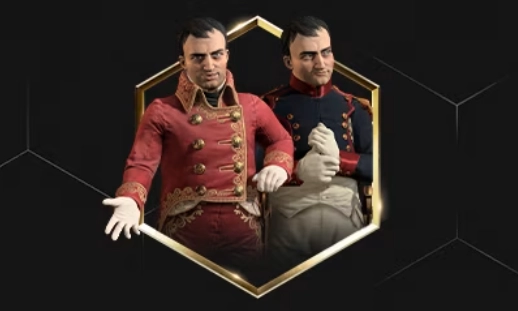
Napoleon Bonaparte remains one of the most famous leaders in history. Born in Corsica, his rapid rise through the French army culminated in a coup d’état that made him First Consul of France in 1799. Four years later, he crowned himself Emperor of the French and established the Continental System, aiming to revitalize France and weaken its enemies. His reign was marked by major civic reforms and wars that ravaged Europe from Spain to Russia.
Unique Ability
Empereur des Français: Gains a unique Diplomatic Action that reduces another civilization’s trade route capacity and generates massive Grievances among their people. Increases Gold each Era for every leader with whom you have a Hostile or Enemy Relationship.
Agendas
Napoleonic Code: Improves Relations by a Moderate Amount with the player who has the smallest standing army. Worsens Relations by a Moderate Amount with the player who has the largest standing army.
Recommended Civilizations
Ancient Era
Egypt
(Historical Option)
Silla
(Strategic Option)
Age of Discovery
Spain
(Historical Option)
Chola
(Strategic Option)
Modern Era
French Empire
(Historical Option)
United States
(Strategic Option)
Napoleon, Revolutionary
(Character)
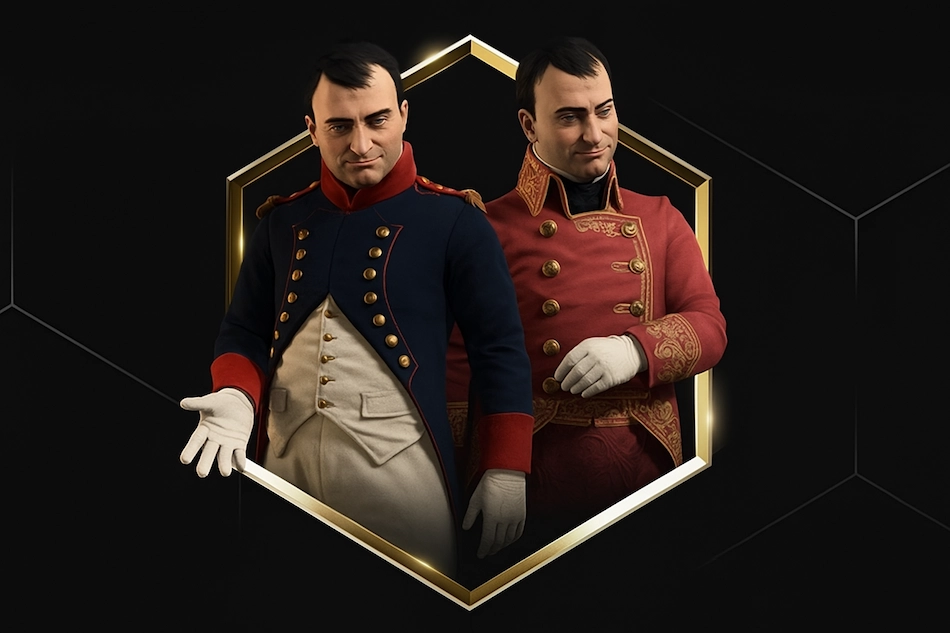
Napoleon Bonaparte remains one of the most famous leaders in history. Born in Corsica, he enlisted in the French army as an artillery officer during the Revolution. His rapid rise culminated in a coup d’état that made him First Consul of France in 1799. Four years later, he crowned himself Emperor of the French and began a series of bloody wars across Europe, from Spain to Russia, showcasing his shrewd military tactics and innovative uses of artillery.
Unique Ability
La Grande Armée: Increases Movement for all land units. When defeating an enemy unit, gains Culture equal to a percentage of its Combat Strength.
Agendas
Culture Through Conquest: Worsens Relations by a Small Amount for each Alliance established between other players. Improves Relations by a Moderate Amount with the player who has the highest Culture yield per turn.
Recommended Civilizations
Ancient Era
Egypt
(Historical Option)
Rome
(Strategic Option)
Age of Discovery
Đại Việt
(Strategic Option)
Bulgaria
(Strategic Option)
Modern Era
French Empire
(Historical Option)
Prussia
(Strategic Option)
Pachacuti
Pachacuti was crowned ruler of the Kingdom of Cusco around the year 1438, after successfully defending it from an invasion, and soon began to conquer the surrounding regions. He possessed equal political and military skill: those he could not conquer by force he showered with gifts, promising prosperity and autonomy in exchange for their loyalty. The Inca Empire would only last sixty years after his death, with the arrival of the Spanish, but Pachacuti’s legacy endures nonetheless.
Unique Ability
Cataclysm: All Buildings gain Food adjacency from Mountains. Specialists adjacent to Mountains do not pay Happiness maintenance.
Agendas
King of the Mountains: Improves Relations by a Moderate Amount with the player who has the fewest Mountains in their territory. Worsens Relations by a Moderate Amount with the player who has the most Mountains in their territory.
Recommended Civilizations
Ancient Era
Mayans
(Geographic Option)
Mississippians
(Strategic Option)
Age of Discovery
The Inca
(Historical Option)
Hawai‘i
(Strategic Option)
Modern Era
Mexico
(Geographic Option)
United States
(Geographic Option)
Simón Bolívar
When the Napoleonic Wars weakened Spain’s presence in the Americas, Simón Bolívar, “The Liberator”, led the forces to free the region. With tenacity and charisma, he led his armies to victory and his people to independence. But the instability of the new freedom proved difficult to overcome. First president and then dictator of Gran Colombia, he failed to fully realize his ambitions. Nonetheless, Bolívar remains an enduring symbol of South American rebellion.
Unique Ability
El Libertador: Gains a free amount of War Support in wars. When you conquer a Settlement for the first time, you can purchase one free Building. Allows you to purchase items while in Unrest.
Agendas
King of the Mountains: Improves Relations by a Moderate Amount with the player who has the fewest Mountains in their territory. Worsens Relations by a Moderate Amount with the player who has the most Mountains in their territory.
Recommended Civilizations
Ancient Era
Mayans
(Geographic Option)
Tonga
(Strategic Option)
Age of Discovery
Spain
(Historical Option)
Mongolia
(Strategic Option)
Modern Era
Mexico
(Geographic Option)
French Empire
(Strategic Option)
Tecumseh
Tecumseh is part of the Tecumseh & the Shawnee DLC Pack. The Tecumseh & the Shawnee Pack is included in the Civilization VII Deluxe and Founders Editions. It can be purchased separately. Base Game required.
Tecumseh, “the one who rises against the great expansion”, was a Shawnee chief who fought against the westward expansion of the early United States. Together with his brother Tenskwatawa, he spread a message of unity and resistance among Native American peoples. Although Tecumseh died during the War of 1812, his vision of cultural persistence lives on.
Unique Ability
Nicaakiyakoolaakwe: Increases Food and Production per Era in Settlements for each City-State of which you are Suzerain. Increases the Combat Strength of Units for each City-State of which you are Suzerain.
Agendas
Suzerain of the World: Worsens Relations by a Large Amount when the player disperses an Independent, and Improves Relations by a Small Amount if the player does not have an active “Make Friends with Independent” project.
Recommended Civilizations
Ancient Era
Mississippians
(Geographic Option)
Silla
(Strategic Option)
Age of Discovery
The Shawnee
(Historical Option)
Chola
(Strategic Option)
Modern Era
United States
(Geographic Option)
Kayar
(Strategic Option)
Trung Trắc
For a brief time in what is now Vietnam, two sisters, Trung Trắc and Trung Nhị, stood up to the might of the Han dynasty. When her husband was condemned to death, Trung Trắc and her sister fought back, winning independence for three years before the Han counterattack. They are still regarded as symbols of Vietnamese independence and deities in their own right.
Unique Ability
Hai Bà Trưng: Gains a set number of free Promotions on your first Commander. Your Commanders gain additional experience. Gains increased Science in Cities on Tropical tiles; this bonus increases during any Formal War you declare.
Agendas
Văn Minh: Worsens Relations by a Moderate Amount with the player who has the greatest number of Promotions across all Commanders. If there is a tie, it worsens Relations by a Small Amount with each tied player. Improves Relations by a Moderate Amount with the player who has the fewest Promotions across all Commanders. If there is a tie, it improves Relations by a Small Amount with each tied player.
Recommended Civilizations
Ancient Era
Han China
(Historical Option)
Assyria
(Strategic Option)
Age of Discovery
Đại Việt
(Historical Option)
Ming China
(Strategic Option)
Modern Era
Qing China
(Historical Option)
Meiji Japan
(Strategic Option)